
Is Málaga worth visiting? I’ve heard the criticism. Here’s the honest answer from someone who lives here.
On Reddit, in travel forums, in the comments sections of travel blogs, you’ll find a recurring complaint about Málaga: “boring”, “nothing to see”, “least interesting city I’ve visited”. I’ve read them all. And I think I understand exactly where they come from — and exactly why they’re wrong, or at least incomplete. So: is Málaga worth visiting? This is my honest answer.
Why some people leave disappointed — and why it’s not the city’s fault
Málaga has a problem that no amount of good weather can fix: it looks like a historic city but doesn’t always feel like one. The old town is genuinely attractive — well-maintained, visually coherent, pleasant to walk through — but the streets don’t narrate their own history the way Rome or Barcelona do. There are no grand monuments on every corner, no ruins visible from the main boulevard, no immediate sense of the layers of civilisation underneath your feet.
And there are layers. Extraordinary ones. What most visitors don’t know — and what almost no guide explains — is that Málaga was a Phoenician city. The sea once reached as far as what is now the Atarazanas market and the Alameda. The narrow, labyrinthine streets of the old town aren’t a design quirk — they’re the preserved layout of a medieval Jewish quarter, a judería, built on a shoreline that no longer exists.
A tourist expecting the density of visible heritage found in Seville or Granada will feel the gap. That’s a legitimate observation. But it’s a gap born of expectation, not of the city’s actual value. So is Málaga worth visiting? It depends entirely on what you’re expecting.
Is Málaga worth visiting for you? Who it suits and who it doesn’t
01 — Málaga will exceed your expectations if…
- You want good weather, beaches, and a city that knows how to enjoy itself
- You care about eating well — from breakfast to late dinner, Málaga’s food offer is exceptional
- You want a base for exploring the province — Ronda, Nerja, the Caminito del Rey, all within an hour
- You want nightlife, festivals, and social energy without having to search for it
- You’re travelling with a mix of interests — beach, culture, food — Málaga handles all simultaneously
- You want to understand southern Spanish culture without the intensity of Seville or Barcelona
02 — Málaga will underwhelm you if…
- You’re primarily motivated by monumental heritage and expect visible history at every turn
- You’re comparing it to Rome, Barcelona, or Seville and expecting the same density of landmarks
- You arrive without doing any research and expect the city to explain itself to you
- You visit in a quiet period without checking the city’s event calendar
Is Málaga worth visiting compared to other Spanish cities?
03 — What Málaga does better than almost anywhere in Spain
Put Málaga next to its Spanish rivals and the picture becomes clearer. Here’s the honest comparison:
| Category | Málaga | vs Others |
|---|---|---|
| Food | Exceptional density, great value | Better than Barcelona, comparable to Seville |
| Beach access | Direct from the city centre | Unmatched by Seville, Granada or Barcelona |
| Airport connection | Train to centre in 8 minutes, under €2 | Better than almost any European city |
| Day trips | Province is extraordinary | Ronda, Nerja, Caminito — hard to match |
| Safety | Low crime in the centre | Significantly safer than Barcelona |
| Nightlife & festivals | Year-round, high energy | Semana Santa, Carnaval, Noche en Blanco |
| Monumental heritage | Limited at street level | Less than Seville, Granada or Barcelona — honest |
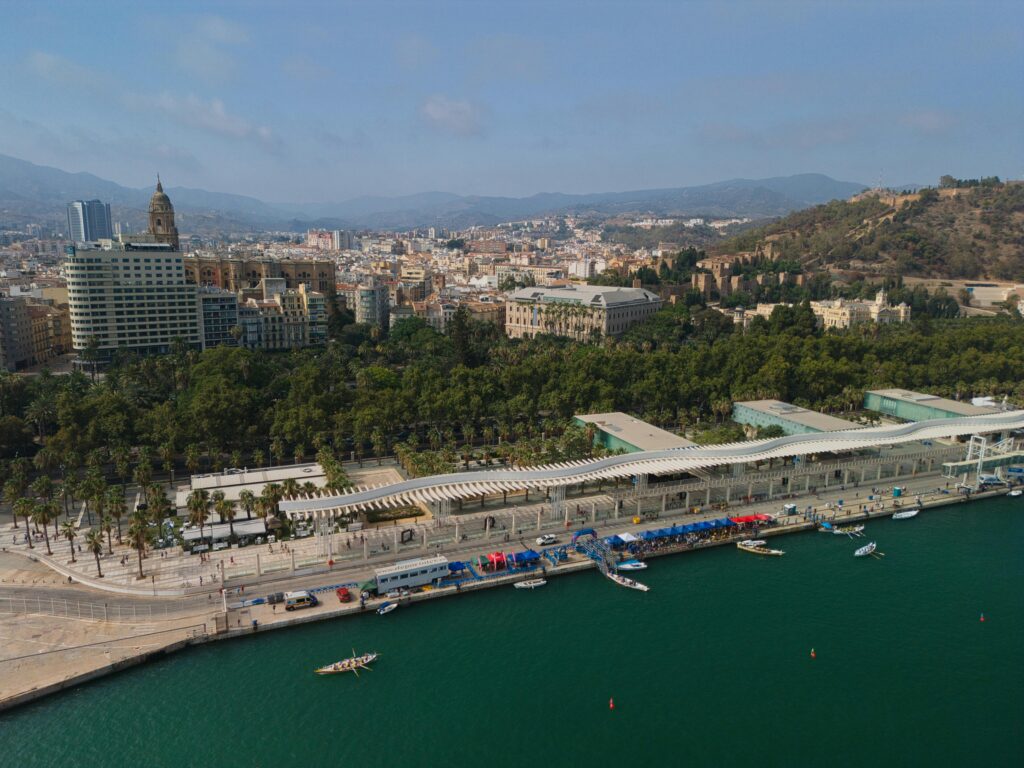
The port is in the city centre. The airport train takes eight minutes and costs less than two euros. The old town, the beach, the museums and the best restaurants are all within walking distance of each other. For the kind of trip most people actually want — relaxed, social, well-fed, with good weather and easy logistics — Málaga is extraordinarily well set up. So yes, Málaga is worth visiting — if you know what you’re coming for. For more on planning, see our guide on how many days in Málaga you actually need.
The thing most visitors miss — and why Málaga is worth visiting for this alone
04 — Walk with a local guide at least once
If there’s one thing I’d tell every visitor who wants to understand Málaga rather than just enjoy it — spend two or three hours walking with a local guide. The streets of the old town look like attractive but unremarkable Mediterranean lanes. With context, they become something else entirely.
That narrow passage was the edge of the Jewish quarter. That wall is Phoenician. The reason the Atarazanas market is where it is — because the sea came to that exact point two thousand years ago. The city was built on a shoreline that no longer exists. None of this is visible without someone pointing at it.
Free walking tours operate daily from the historic centre. Paid private guides offer more depth. Either way, budget two to three hours and do it early in your stay. For more on what to see, check our full guide to things to do in Málaga. For official tourism information, visit turismo.malaga.eu.
When to visit Málaga — because timing matters more here than most cities
05 — Málaga’s calendar changes everything
| Period | What’s on | Verdict |
|---|---|---|
| February | Carnaval | Underrated. Excellent atmosphere, fewer tourists |
| March / April | Semana Santa | Spectacular but crowded. Book everything in advance |
| May / June | Good weather, lower crowds | Best time to visit — locals agree |
| July / August | Peak season, festivals, beach | Hot, crowded, expensive — but maximum energy |
| September | Feria de Málaga, film festival | One of the best months in the city |
| October / November | Quieter, mild weather | Good for slower travel and day trips |
| December | Christmas lights, Noche en Blanco | Genuinely festive — not like northern European markets but worth it |
The complaint “Málaga is boring” almost always comes from someone who visited in a quiet period without checking what was on. Arrive during Semana Santa, the Feria, or Carnaval and you will not use the word boring.
My honest verdict: is Málaga worth visiting?
Yes — if you know what you’re coming for.
It’s not a city of monuments. It’s a city of living well: eating well, being outside, moving between the beach and the old town and the hills without effort, and experiencing a version of southern Spanish life that is warm, social, and genuinely enjoyable.
The history is there — buried, largely unexcavated, waiting for someone to point it out. The food is exceptional. The logistics are some of the best of any city in Europe. The province around it is extraordinary. If you come expecting a few days of good weather, excellent food, easy living and at least one day trip that will stay with you — Málaga will give you all of that, and probably more than you expected. That’s the honest answer to whether Málaga is worth visiting. And I think it’s a good one.