
Antequera is the most underrated day trip from Málaga. 45 minutes from the city, a UNESCO World Heritage Site, and almost no international tourists.
I live in Málaga. The Antequera day trip from Málaga is the one I recommend to visitors who want to go somewhere genuinely different — not another cliff-top town or coastal resort, but a city of extraordinary prehistoric monuments, alien rock formations and 30 Baroque churches for a population of 40,000 people. This is the honest guide.
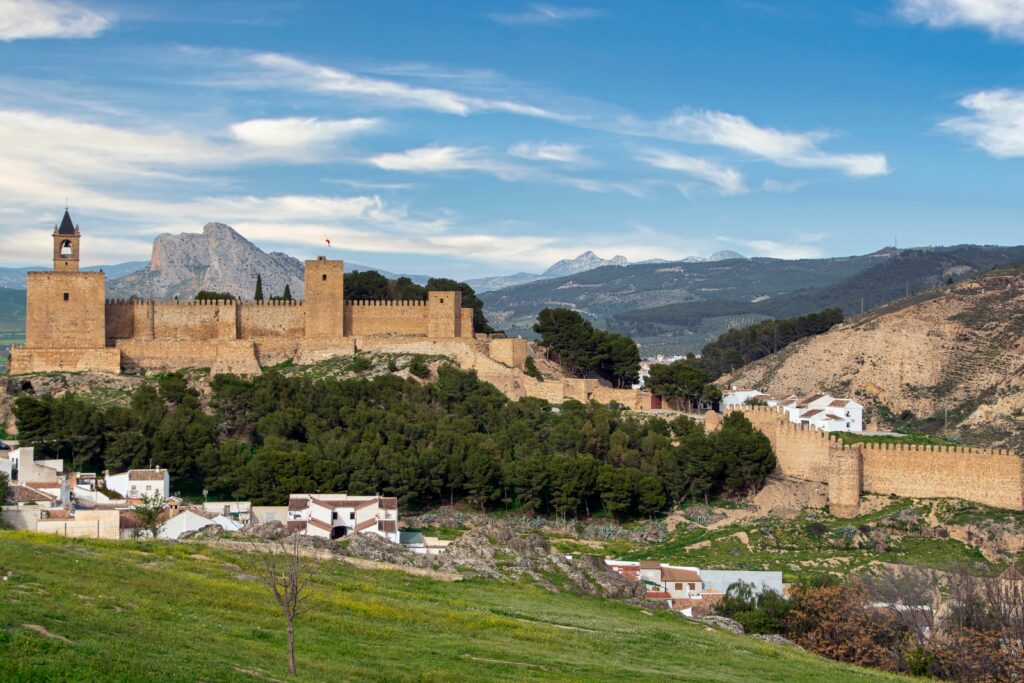
The Antequera day trip from Málaga is the closest day trip available — just 45 minutes by car or 25 minutes by high-speed train. Unlike the Antequera day trip from Málaga alternatives like Ronda or Nerja, here you get three completely different experiences in one day: prehistoric monuments, alien rock formations and a genuine Andalusian city with almost no international tourists.
Getting to Antequera from Málaga — transport options
| Option | Time | Cost | Notes |
|---|---|---|---|
| Train AVE/Avant (María Zambrano → Antequera AV) | ~22–25 min | €8–€15 | Fastest option — see warning below |
| Bus (ALSA — Málaga bus station) | ~1 hour | €5–€8 | Direct, central arrival |
| Car (A-45 motorway) | ~40–45 min | Fuel only | Only option for El Torcal |
01 — The train station warning — read this before booking
Antequera has two train stations and the difference between them is critical. Antequera AV (also called Antequera Ciudad) is the correct station — a modern high-speed station about 20-25 minutes’ walk from the historic centre, or 5 minutes by taxi. The AVE and Avant services from Málaga María Zambrano reach it in just 22-25 minutes.
Antequera-Santa Ana is 20 kilometres outside the city in the middle of the countryside. Some high-speed services stop there. If you get off at Antequera-Santa Ana by mistake, a taxi to the centre will cost a significant amount. Always verify your ticket says “Antequera AV” or “Antequera Ciudad” before boarding. Book at renfe.es.
02 — By car — the only option for El Torcal
El Torcal has no public transport connection from Antequera city. If you want to combine the dolmens with El Torcal in a single day — which you should — a hire car is essential. Take the A-45 motorway from Málaga towards Córdoba/Granada. Park at the underground car park at Plaza de Toros or Plaza San Francisco in Antequera centre — both are cheap and well located.
The Dolmens of Antequera — UNESCO World Heritage Site
03 — 6,000-year-old monuments that break the rules of prehistory
The Dolmens of Antequera — Menga, Viera and El Romeral — are among the most important megalithic monuments in the world, built during the Neolithic period and Bronze Age more than 6,000 years ago. They were declared a UNESCO World Heritage Site in 2016.
What makes them globally significant: the vast majority of European dolmens are oriented towards the rising sun — a standard astronomical alignment. The Dolmen of Menga, the largest of the three, built with stones weighing up to 180 tonnes, breaks this rule entirely. It is oriented towards a mountain called La Peña de los Enamorados — the Lovers’ Rock — which has the profile of a human face lying down. This is a unique case in world prehistory of a megalithic monument oriented towards a natural landscape feature rather than an astronomical event. Nobody knows exactly why.
Walking inside the Dolmen of Menga — under those gigantic stone slabs, in the silence and the cool darkness — is genuinely overwhelming. Entry to the UNESCO site is completely free for EU citizens. Non-EU visitors pay a small fee. Check opening times at the Museos de Andalucía website.
El Torcal de Antequera — walking on another planet
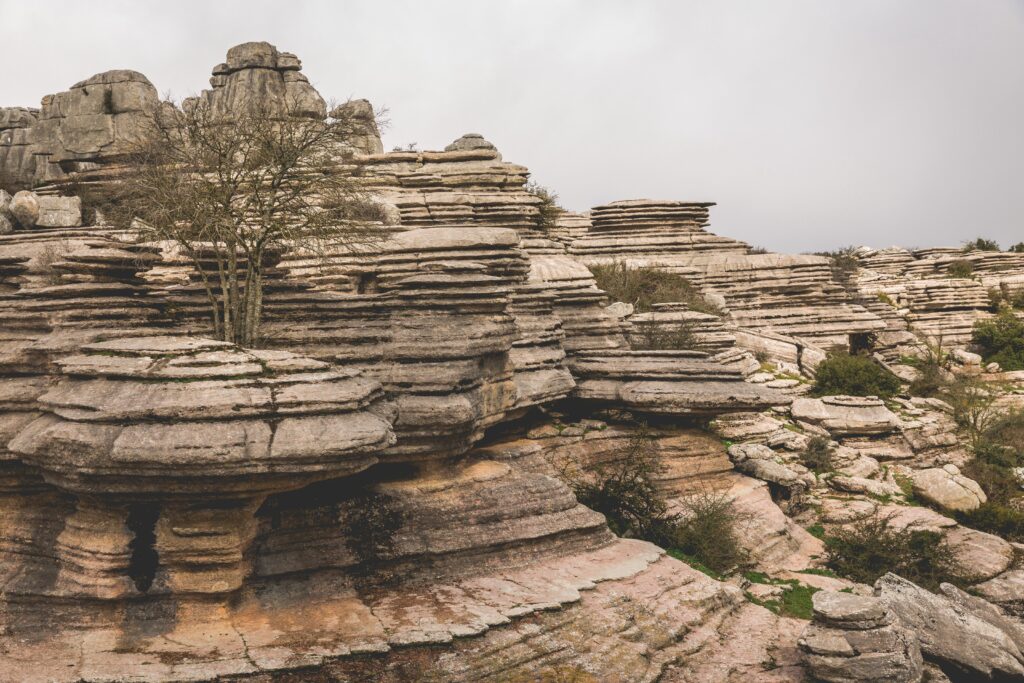
04 — The floor of a prehistoric ocean, 1,200 metres above sea level
150 million years ago, El Torcal was the floor of the Tethys Sea. Marine sediments accumulated over millions of years until tectonic plate movements pushed the seabed thousands of metres upward. Wind, water and ice have spent millions of years sculpting the exposed limestone into formations that look like nothing else in Europe — geometric stacks of rock resembling giant piles of pancakes, narrow stone corridors, natural sculptures in every direction. It is one of the finest examples of karst topography in the world.
Wild mountain goats roam freely through the formations, walking within metres of visitors without concern. The visitor centre at the entrance is free. The walking routes are free.
05 — The walking routes
| Route | Distance | Duration | Best for |
|---|---|---|---|
| Ruta Verde (Green) | 1.5 km | ~45 min | Families, limited time, first visit |
| Ruta Amarilla (Yellow) | 3 km | 1.5–2 hours | Deeper immersion, best formations, mountain goats |
The Yellow Route is the recommended option for anyone who wants the full El Torcal experience. It takes you into the most labyrinthine sections of the karst — narrow stone corridors where the rock walls rise above you on both sides — and the chances of encountering mountain goats are high.
Critical warnings for El Torcal
- Temperature — El Torcal sits at over 1,200 metres altitude. Even in summer it can be 6–8°C colder than Málaga city. Bring a layer regardless of the weather in the capital.
- Fog — sea air rising from the coast can cover El Torcal in dense fog in under 15 minutes, reducing visibility to two metres. If fog descends while you’re on a route, do not leave the marked path. The karst is an identical maze in every direction and disorientation is genuinely dangerous.
- Footwear — sandals and flip-flops are prohibited. The limestone is polished smooth by millions of years of water and is extremely slippery. Trainers with grip or hiking boots are essential.
Antequera city — what else to see
06 — The Alcazaba and Santa María la Mayor
A 14th-century Arab fortress crowning the city, with panoramic views over the rooftops of Antequera and directly towards La Peña de los Enamorados — the same mountain the Dolmen of Menga was oriented towards 6,000 years ago. The view makes the prehistoric alignment suddenly make sense.
At the base of the Alcazaba, the Real Colegiata de Santa María la Mayor was the first columnated Renaissance building in Andalusia (16th century). Its neoclassical facade looks more like a Roman temple than a Christian church — an extraordinary piece of architecture that most visitors to Antequera walk straight past.
07 — What to eat — porra antequerana
The defining dish of Antequera is the porra antequerana — a cold soup thicker and more intense than salmorejo, made with local telera bread, tomatoes, olive oil, garlic and green pepper. Served cold, topped with chopped serrano ham and hard-boiled egg. One of the great cold soups of Andalusia and almost impossible to find outside the province. Order it at any traditional bar in the historic centre.
What most guides don’t tell you about Antequera
08 — Mirador de las Almenillas at sunset
Every guide sends you to the Alcazaba in the morning. The local secret is the Mirador de las Almenillas — a stone balcony next to the Arco de los Gigantes — at sunset. As the sun drops, it illuminates the profile of La Peña de los Enamorados directly, turning the human face in the mountain a deep golden red. At the same time, the dozens of church towers and baroque domes of Antequera below you light up progressively as the evening lamps come on. Almost no tourists are here. It’s one of the most atmospheric moments available on any day trip from Málaga.
Antequera day trip from Málaga — the perfect itinerary
| Time | Activity | Notes |
|---|---|---|
| 9:30am | Arrive — Dolmens of Antequera | Go early before tour groups arrive |
| 10:30am | Alcazaba and Santa María la Mayor | Views of La Peña de los Enamorados |
| 12:00pm | Walk the historic centre | 30+ churches — pick two or three |
| 1:30pm | Lunch — porra antequerana | Any traditional bar in the centre |
| 3:00pm | Drive to El Torcal | 20 minutes from the centre by car |
| 3:30pm | Yellow Route — El Torcal | 1.5–2 hours — bring a layer |
| 6:00pm | Return to Antequera — Mirador de las Almenillas | Sunset over La Peña de los Enamorados |
| 7:30pm | Return to Málaga | ~45 minutes by car or train |
My honest recommendation for the Antequera day trip from Málaga
Start at the Dolmens. Stand inside the Dolmen of Menga and look towards La Peña de los Enamorados — the same view the people who built it were looking at 6,000 years ago. Drive to El Torcal in the afternoon and do the Yellow Route. End at the Mirador de las Almenillas at sunset.
The Antequera day trip from Málaga is the most culturally dense and visually varied day trip available from the city. It’s also the least crowded by international tourists. That combination is rare and it’s worth taking advantage of. For more day trip options from Málaga, see our complete day trips guide. For transport options, see our guide to getting around Málaga.