
Málaga has a food culture that most tourists only scratch the surface of. This guide goes deeper.
I live here. I eat here every day. And the question I get asked most — where to eat in Málaga — has a longer and more honest answer than most guides are willing to give. This is that answer.
Before you book a table: the traps and how to avoid them
The good news first: Málaga’s centre has fewer tourist traps than it used to. The bad news: they still exist, and they’re concentrated in predictable places. Knowing where to eat in Málaga starts with knowing where not to.
Places to approach with caution
- Plaza de la Merced — high foot traffic, variable quality. Check reviews before committing.
- Calle Alcazabilla — avoid tourist-facing spots on this strip.
- Alameda Principal — dominated by fast food and low-quality restaurants. Walk past.
The single most reliable warning sign: a waiter standing at the door inviting you in. A bar that knows its food is good doesn’t need to recruit customers from the pavement. Walk on.
The second warning sign: large photo boards of food on the walls, especially paella. Most of what’s sold as paella in tourist areas is pre-cooked rice with poor-quality seafood. The simple rule that works everywhere when deciding where to eat in Málaga: look at who’s eating there. A restaurant full of locals at 2pm on a Tuesday is almost certainly good.
Where to eat in Málaga — the zones that actually work
01 — Where to eat in Málaga city centre
Within the historic centre, the areas around Plaza del Siglo, Plaza de Uncibay, Calle Chinitas and the Soho neighbourhood offer consistently good options. These squares and streets have enough competition to keep quality up and enough local custom to keep standards honest. The centre operates almost entirely on a non-stop kitchen schedule — adapted to tourist rhythms — so you won’t be turned away between meals.
One practical note: Málaga fills up. Between 9pm and 10pm on a weekend, every decent place in the centre will be packed. If you’ve found somewhere you want to go back to, arrive before 9pm or book ahead.
02 — Where to eat seafood in Málaga
Málaga’s reputation for seafood is real — but earning the best version of it requires moving slightly away from the most obvious spots. For marisquerías and fresh fish in the centre, the area around Mercado de Atarazanas is your best reference point. The market itself is worth visiting in the morning; the bars and restaurants around it tend to source well.
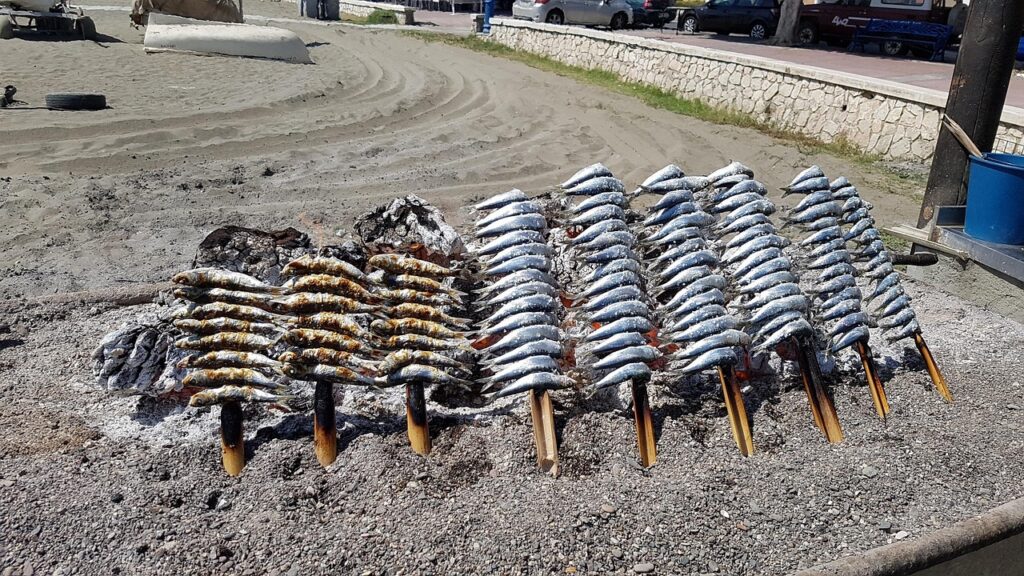
For the genuine article, go to the beach neighbourhoods. Huelin, Pedregalejo and El Palo are where Málaga’s chiringuitos do what they’ve always done: grill sardines on espeto skewers over open fires on the sand, serve fresh pescaíto frito, and charge honest prices to local families who know exactly what they’re eating.
The espeto de sardinas at a good chiringuito in Pedregalejo on a summer evening is one of the best eating experiences this city offers. It costs almost nothing and it’s completely irreplaceable.
Go to
- Chiringuitos in Pedregalejo and El Palo
- Marisquerías around Mercado de Atarazanas
- Any bar where locals are eating fish
Avoid
- Paella photo boards anywhere in the centre
- Seafood restaurants on the Alameda
- Any place with a tout at the door
03 — Where to eat in Málaga if you want the real thing: the Montes
This is the recommendation that separates a good trip from an exceptional one — and almost no travel guide mentions it. In the hills above Málaga, in the ventas of the Montes de Málaga, you’ll find the most honest, most generous, most deeply Malagueño cooking in the province. This is where locals go on Sunday with their families.
What to order when eating in Málaga’s Montes:
- Plato de los Montes — marinated pork loin with fried potatoes, eggs and roasted peppers. Simple, enormous, completely satisfying.
- Carnes a la brasa — grilled meats over wood fire at a fraction of city prices.
- Callos — slow-cooked tripe stew. Not for everyone, but extraordinary if you eat offal.
- Gazpachuelo malagueño — warm soup of mayonnaise, potatoes, prawns and fish. A Málaga original that almost no tourist tries.
- Arroz caldoso — soupy rice near the Pantano del Agujero reservoir. Worth a specific detour.
Practical note
A taxi from the centre to the Montes and back, with two to three hours for lunch, is a reasonable investment. Agree on a return pickup time before your driver leaves. Most ventas don’t take reservations — arrive between 1:30pm and 2:30pm for the best choice of table.
Understanding Málaga’s meal times — essential for eating well here
04 — When to eat in Málaga
| Meal | Local time | Note |
|---|---|---|
| Breakfast | 8:00–10:30am | Coffee and tostada con aceite. Don’t skip it. |
| Lunch | 1:00–4:00pm | Main meal. Menú del día: starter, main, drink for €10–14. |
| Tapas / afternoon | 6:00–9:00pm | The social hour. Light eating, drinks, conversation. |
| Dinner | 8:30–11:00pm | Later than you expect. Peak is 9–10pm. Book ahead. |
In the tourist centre, almost every restaurant runs a non-stop kitchen. In neighbourhood bars outside the centre, kitchens follow local hours strictly — turn up at 5pm expecting a full meal and you’ll get a bocadillo at best.
The menú del día is one of Málaga’s best-kept secrets for visitors. At lunch, almost every neighbourhood bar offers a fixed menu: a starter, a main course, bread, a drink and sometimes dessert, for between €10 and €14. It’s the best value eating in the city, by a distance — and a genuine insight into how Málaga actually eats every day. For more on navigating the city, see our guide to getting around Málaga.
My honest recommendation on where to eat in Málaga
Eat your main meal at lunch, not dinner. Order the menú del día at a neighbourhood bar at least once. Walk to Pedregalejo for espetos on an evening when you have time. And if you’re staying five days or more, take a taxi to the Montes for Sunday lunch. That’s the full version of eating in Málaga.
The centre is fine — good, even, in the right places. But the food that defines this city is in the hills and on the beach, not in the tourist squares. Go looking for it and you’ll find it without much difficulty. For more on planning your time, see our guide on how many days in Málaga you need.