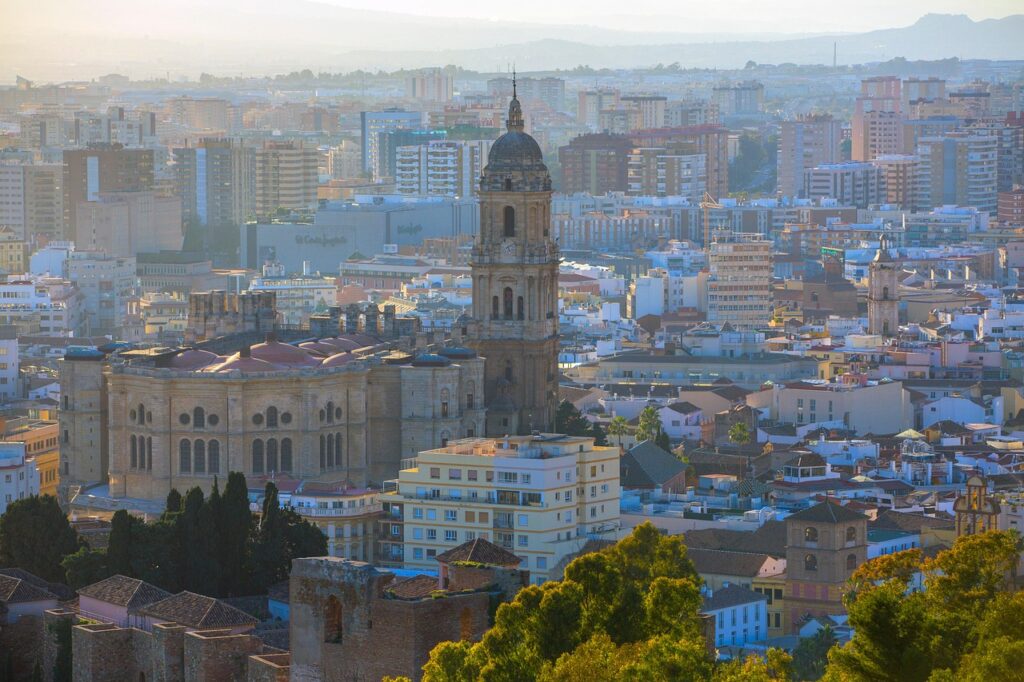
Málaga Cathedral is one of the finest Renaissance interiors in Andalusia. Most visitors spend 20 minutes inside and miss almost everything.
I live here. The Málaga Cathedral — La Manquita, the one-armed lady — is the most visible building in the city and one of the most consistently underestimated. This guide covers what’s actually worth your time inside, the real story behind the missing tower, what nobody tells you about the walls on the outside, and exactly how to visit without queuing in the sun for 40 minutes.
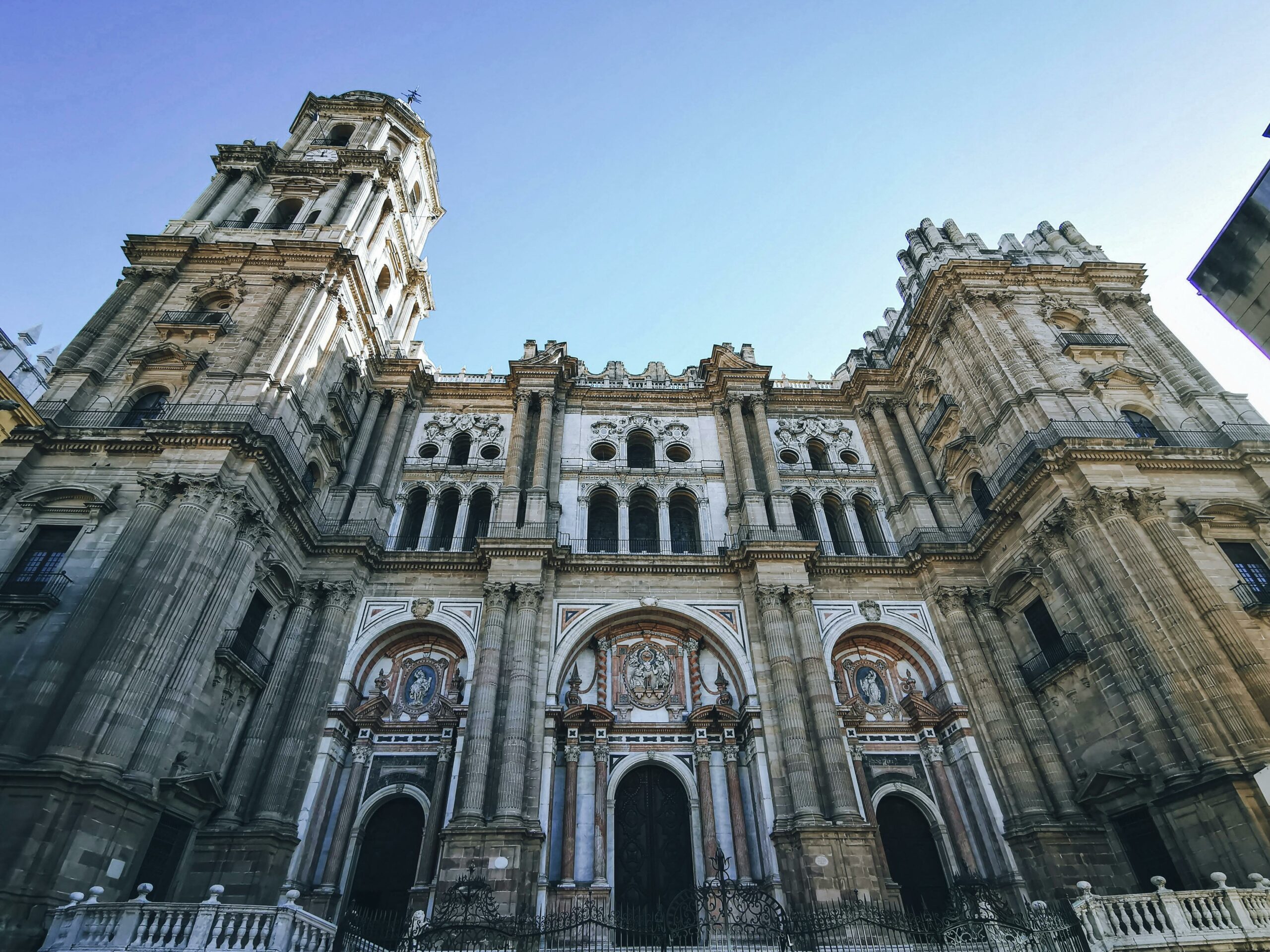
Málaga Cathedral — the real story behind La Manquita
01 — Why the second tower was never built
The first thing any visitor notices about Málaga Cathedral is its asymmetry. The north tower rises 84 metres and dominates the city skyline. The south tower stops at a fraction of that height — a stump of stone that gives the cathedral its nickname: La Manquita, the one-armed lady.
The popular story — repeated in guidebooks and by well-meaning locals — is that the money destined for the south tower was sent to finance George Washington’s troops during the American War of Independence. It’s a romantic story. It’s also not true.
The historical documents in the cathedral archive tell a more complicated story. The construction funds — raised through a special tax on trade — were redirected towards the war with Britain, specifically the campaigns in Florida and the Caribbean. But the more significant cause was simpler: the budget ran out through continuous internal renovations, and in 1782 the Spanish Crown under Carlos IV ordered the works to stop. They never resumed.
The cathedral remains technically unfinished today. There is an ongoing architectural and political debate in the city about whether the second tower should be built following the original plans, or whether La Manquita’s incompleteness has become so central to its identity that completing it would be a mistake. The debate has no resolution in sight.
Inside Málaga Cathedral — what you’ll actually find
02 — The interior most visitors underestimate
Málaga Cathedral was begun in 1528 on the site of the main mosque following the Christian reconquest. The architect Diego de Siloé designed a Renaissance structure using a system of double superimposed columns that creates vault heights of almost 42 metres. The result is not what most visitors expect from an Andalusian cathedral — it’s more luminous, more spacious and more geometrically coherent than the Gothic interiors of Seville or Granada.
The light that enters through the high windows at different times of day changes the atmosphere completely. At 10am on a clear morning it’s one of the most beautiful interiors in southern Spain.
03 — The choir stalls — one of the great works of Spanish Baroque sculpture
The cathedral’s most extraordinary object is the choir stall, positioned in the centre of the nave. Carved by Pedro de Mena in noble woods — cedar, mahogany and granadillo — it contains 42 figures of saints with a level of detail that rewards close attention. The expressions on the faces, the folds of the robes, the individual character of each figure — this is one of the peaks of Spanish Baroque woodcarving and it’s consistently underlooked by visitors who don’t know what they’re looking at.
Spend 15 minutes just at the choir stall. Walk around it slowly. Look at each figure individually. It’s worth it.
04 — The twin organs — 4,000 pipes and still playing
On either side of the choir, two monumental 18th-century organ cases face each other across the nave. Together they contain over 4,000 pipes. What makes them remarkable is not just their scale — it’s that they’re not museum pieces. Both organs are fully restored and still used in concerts and liturgical celebrations. The acoustics of the cathedral at organ volume are physically overwhelming in the best possible way. If you happen to visit during a rehearsal, stop and listen.
The Málaga Cathedral rooftop — is it worth it?
05 — Walking across the cathedral roof
Yes — it’s worth it. The rooftop access at Málaga Cathedral is one of the best elevated experiences in the city and consistently underrated compared to the Alcazaba or Gibralfaro. You walk literally on top of the cathedral’s spherical vaults, surrounded by stone balustrades, with a 360-degree panorama of the city below.
What you see from the top: the port and Muelle Uno directly below, the Alcazaba and Gibralfaro Castle climbing the hill to the east, the entire historic centre’s terracotta rooftop landscape, and on clear days the coastline stretching west towards Torremolinos and east towards Nerja.
The access is via a narrow spiral staircase of over 200 steps inside one of the towers. No lift — not suitable for people with limited mobility or severe claustrophobia. Children under 7 are not permitted on the roof for safety reasons.
Rooftop tip
Book the last afternoon slot available — in spring, summer and autumn there are evening access times. Watching the sunset over the sea from the roof of the tallest building in the historic centre, with the city below turning gold, is one of the best free experiences Málaga offers at any price. Book in advance — the daily capacity is strictly limited and afternoon slots sell out first.
Málaga Cathedral — prices, hours and how to avoid the queues
06 — Entry prices
| Ticket type | Cathedral only | Rooftop only | Combined |
|---|---|---|---|
| General (adults) | €10 | €10 | €15 |
| Reduced (65+ / students under 25) | €9 | €9 | €14 |
| Young (13–17 years) | €6 | €6 | €9 |
| Children (under 13, accompanied) | Free | Free | Free |
The combined ticket is the recommended option — seeing the interior without the rooftop, or the rooftop without the interior, means missing half the experience. The audioguide is included free with every ticket — download it on your smartphone by scanning the QR code at the entrance. Bring your own earphones.
07 — Free entry — the timing trick
Málaga Cathedral is free to enter Monday to Thursday from 8:30 to 9:00am — for the worship area only, in complete silence. If your budget is tight and you want to experience the interior atmosphere without paying, this is the window. The cathedral at 8:30am, in near-silence with the morning light coming through the high windows, is arguably a better experience than at midday with a hundred other visitors.
08 — How to avoid the queues
The worst time to visit Málaga Cathedral is between 11am and 1:30pm. That’s when cruise ship passengers arrive from the port and large tour groups from travel agencies fill the Plaza del Obispo. The queue in the sun can exceed 40 minutes.
The two best windows: arrive at 10am when the doors open for tourists — the cathedral is quiet and the light is excellent. Or arrive between 2:30pm and 4pm, when everyone is at lunch and the interior empties significantly.
Buy tickets in advance online through the official diocesan website — you receive a QR code directly to your phone and access through the priority entrance, bypassing the physical queue entirely. For the rooftop, advance booking is essential — daily capacity is strictly limited by timed slots and afternoon slots sell out days in advance in peak season.
What nobody tells you about Málaga Cathedral
09 — The bullet marks on the outside walls
Before you leave, walk around the outside of the cathedral — specifically along Calle Postigo de los Abades, the pedestrian street that runs behind the building towards the park. Look at the sandstone walls at eye level. Look carefully.
You’ll see dozens of impacts, cracks and rounded holes in the stone. These are real bullet marks from the Spanish Civil War — from executions and firefights that took place in this area in 1936. The cathedral was used temporarily as a warehouse and improvised shelter during the most violent months of the conflict, and the marks of that history are still there in the stone, completely unremarked by any sign or information panel.
99% of tourists who visit Málaga Cathedral walk past these marks without seeing them. They’re looking up at the towers. The history is at eye level, on the back wall, in a street most visitors never walk down.
My honest recommendation for visiting Málaga Cathedral
Buy the combined ticket. Arrive at 10am or between 2:30pm and 4pm. Spend 15 minutes at the choir stall — really look at Pedro de Mena’s figures. Book the late afternoon rooftop slot in advance and go up for the light. Walk around the outside on Calle Postigo de los Abades and find the bullet marks.
Most visitors spend 20 minutes inside and leave without understanding what they saw. Give it two hours and it becomes one of the best things you do in Málaga. For more on what to see in the city, see our complete guide to things to do in Málaga. For official ticket booking, visit the official cathedral website.