
Seafood in Málaga is not just food. It’s a cultural identity, a religion and the main reason many Spaniards make the trip.
I live here. The best seafood in Málaga is not found on the tourist menus of the historic centre — it’s found on the beach, at a chiringuito with paper tablecloths and a wooden boat full of burning olive wood on the sand. Málaga seafood at its purest. This guide tells you exactly what to order, where to go and how to eat it properly.
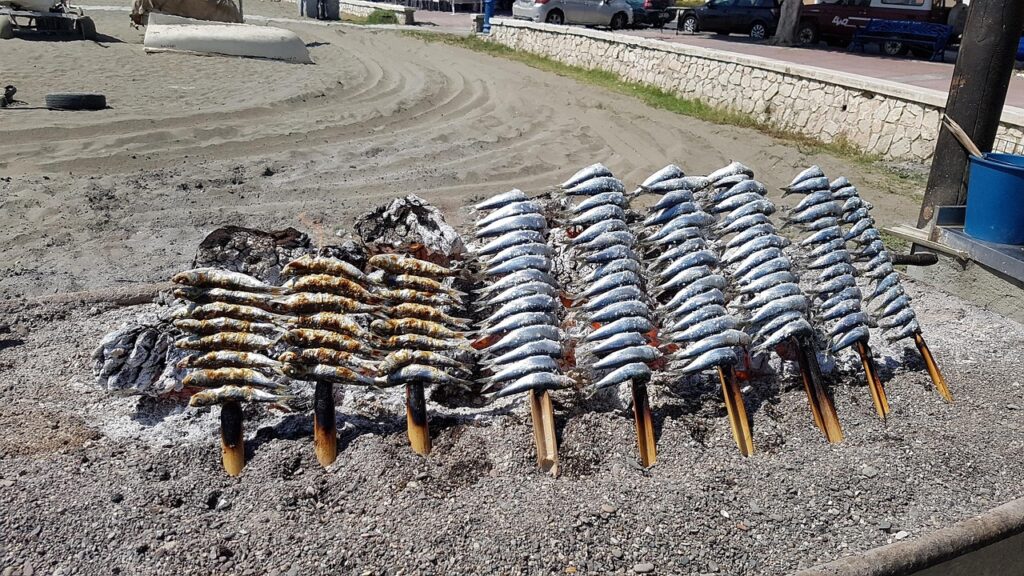
The best seafood in Málaga — dishes you need to try
Málaga has one of the most historically important fishing fleets in the Mediterranean. Málaga fish comes from the Mar de Alborán — the stretch of sea between Spain and Morocco — where Atlantic currents give the local catch a distinctive flavour found nowhere else on the Spanish coast. These are the dishes that define it.
01 — Boquerones — the Málaga fish that defines the city
Malagueños are nicknamed “boquerones” — anchovies — and the local anchovy is the most iconic Málaga fish of all: small, silver-skinned, firm-fleshed, caught fresh from the bay. They come two ways. Fried — in small bunches joined at the tail, called manojitos, coated in the finest layer of flour and fried in clean oil until crispy outside and juicy inside. Or marinated in vinegar, garlic and parsley and served cold. Both are essential. Order both.
02 — Conchas finas — the king of Málaga seafood
The concha fina is a large smooth-shelled clam — the undisputed king of Málaga’s seafood culture. It is eaten strictly raw and alive, opened at the moment of serving with a squeeze of lemon, a crack of black pepper and a few drops of olive oil. The texture is meaty, the flavour is like biting into the ocean itself. Price: €2.50–€3.50 per piece. Order two per person to start.
03 — Calamaritos and puntillitas — tiny Málaga fish, one bite each
Baby squid from the bay, fried whole — ink and all in the case of calamaritos — and eaten in a single mouthful. The frying technique is the same as for boquerones: the thinnest possible coating, clean hot oil, immediate serving. When done correctly the outside is crispy and the inside is tender. A ración costs €10–€14 at a good chiringuito.
04 — Coquinas — the addictive small clam
Tiny elongated clams cooked simply: plenty of garlic, a generous pour of local white wine and parsley. They arrive in a broth that you’ll want to soak up with bread. Coquinas are one of those dishes that start as a starter and end as an obsession. A ración costs €12–€16. Few things represent Málaga seafood better — if you see them on a menu, order them.
05 — Cazón en adobo — Málaga’s most underrated seafood dish
Chunks of Málaga fish — traditionally dogfish or similar — marinated in vinegar, garlic, oregano and cumin, then coated in flour and fried. The marinade penetrates the flesh and the result is intensely flavoured, aromatic and completely unlike a standard fried fish. Known locally as bienmesabe — “tastes good to me” — it’s one of the most distinctive things you can eat in Málaga.
The espeto — Málaga’s most iconic seafood experience
06 — What an espeto actually is
The espeto is the oldest cooking technique in the province and one of the candidates for UNESCO Intangible Cultural Heritage status. Sardines — the quintessential Málaga fish — are threaded — espetadas — onto a sharpened cane of cañaveral reed, positioned symmetrically, and cooked horizontally over burning olive wood in the sand of the beach.
The espetero — the master who manages the fire — positions the cane always in the direction of the wind so the fish roasts in radiant heat rather than smokes. The cane must pierce the sardine through the back, just below the spine, so it doesn’t break when turned. It’s a technique that takes years to master and produces a result that cannot be replicated on a metal barbecue.
07 — When to eat espetos — the traditional rule
The traditional rule: sardine espetos should only be eaten in months without the letter ‘R’ — May, June, July and August. In the warmer months the Mediterranean water is warmer, there is more plankton, and the Málaga fish are fatter with a layer of surface fat that makes them extraordinarily juicy when grilled. In winter they’re lean and dry. The rule is not absolute — good chiringuitos serve espetos year-round — but for the best version, go in summer.
08 — How to eat an espeto — the local method
Watching a tourist try to eat espetos with a knife and fork is one of the most common sights on Málaga’s beaches. The result is a destroyed fish, swallowed spines and a frustrating experience. Here’s how locals eat Málaga fish properly:
- Forget the cutlery — espetos are eaten with your hands. Fingers will smell of sardine and olive wood smoke. That’s the experience.
- Hold the fish — grip the sardine by the head and tail between thumb and index finger of each hand.
- First side — eat the upper loin meat in small clean bites from head to tail. The meat should come away easily if the espeto is properly cooked.
- Remove the spine — don’t flip the whole fish. Grip the central spine at the tail end and pull towards the head. It comes out in one clean piece, leaving the second loin exposed and ready.
- Finish — eat the second loin the same way. Leave the head, tail and bones on the edge of the plate.
- The drink — a cold Victoria beer or a tinto de verano. Nothing else is correct.
Authentic chiringuito vs tourist chiringuito — how to tell the difference
09 — The tourist chiringuito
Ibiza-style décor, chill-out music at high volume, Balinese sun loungers, menus with poke bowls and caesar salads alongside “espetos”. Their Málaga fish comes from a freezer or a distributor, not the morning’s catch. The espetos are cooked on modern metal barbecues, not olive wood fires. You pay double for the visual experience. Avoid.
10 — The real chiringuito
The structure may be simple — many have been well renovated — but the signal is always the same: a wooden boat full of sand on the beach with olive wood burning inside it. Paper tablecloths, sandy floors or rough timber decking, waiters moving fast and calling orders at volume. Most importantly: full of local families at lunch on a Sunday. The Málaga fish was bought at the fish market that morning — that’s the difference you taste.
The one signal that never lies
If you can see a wooden boat with burning olive wood on the beach, you’re in the right place. If you can’t see any fire at all, the espetos are being made on a gas or electric grill. Walk on.
Best fish restaurant Málaga — where to eat and honest recommendations
11 — El Tintero — the best fish restaurant Málaga locals never stop talking about
There is no menu at El Tintero. Waiters emerge from the kitchen carrying plates, shouting at full volume what they’re carrying — “¡Llevo boquerones!” “¡Calamares calientes!” — and if you want the dish, you raise your hand and they put it on your table. At the end, a waiter counts the empty plates on your table and calculates your bill. It’s loud, chaotic, genuinely hilarious and one of the best dining experiences in Spain. If you’re looking for the best fish restaurant Málaga has to offer in a completely unique format, this is it. The Málaga fish and seafood quality is excellent and the prices are honest. Go in a group — it works better with four or more people.
12 — Miguelito El Cariñoso — best fish restaurant Málaga beach style
A family chiringuito in Pedregalejo with a terrace that touches the sand. This is the best fish restaurant Málaga’s east coast has — properly made espetos de sardinas over olive wood, perfectly timed, served immediately. The pescaíto frito is exemplary: clean, crispy, not a drop of excess oil. Eating here on a summer evening with the sea in front of you is one of the best things you can do in Málaga at any price.
13 — Los Mellizos — best fish restaurant Málaga city centre
If you don’t want to leave the centre, Los Mellizos is the best fish restaurant Málaga’s historic area has to offer. Proper table service, impeccable Málaga fish quality, a more formal atmosphere than the beach chiringuitos. The pescaíto frito and the mariscos are consistently good. Prices reflect the central location but remain reasonable for the quality.
14 — Freiduría Chupytira — best fish restaurant Málaga for value
In the working-class neighbourhood of Huelin, zero luxury, 100% local atmosphere. Cooked prawns, cigalas and generous portions of pescaíto frito at prices that make the centre establishments look expensive. The Málaga fish here is exceptionally fresh because the neighbourhood has no tourist markup. If you’re staying in Huelin or El Perchel, this is your local seafood option.
Málaga fish and seafood prices — what’s fair and what’s a rip-off
| Dish | Format | Fair price | Warning sign |
|---|---|---|---|
| Espeto de sardinas | Cane (4–6 sardines) | €2.50–€4.50 | Over €6 at a beach chiringuito |
| Boquerones fritos | Full ración | €8.50–€12 | Over €16 at a chiringuito |
| Calamaritos / puntillitas | Full ración | €10–€14 | Over €18 |
| Concha fina | Per piece | €2.50–€3.50 | Over €5 per piece |
| Coquinas al ajillo | Plate / ración | €12–€16 | Under €9 (suspect frozen) |
One practical note: in traditional chiringuitos, the bread and breadsticks placed on your table when you sit down are usually charged separately — between €1 and €1.80 per person. This is standard practice in Spain and legal as long as it’s listed on the menu. Don’t be surprised by it.
The secret behind Málaga fish and pescaíto frito
Most visitors assume the Málaga fish is coated in ordinary wheat flour. It’s not. The secret of Málaga’s freidurías is a hard wheat flour from Andalusian mills — sometimes mixed with a small percentage of chickpea flour. This flour is coarser than standard wheat flour, absorbs almost no oil and creates a paper-thin protective crust around the fish. The Málaga fish doesn’t absorb the fat — it cooks in its own steam inside the crispy coating.
The oil must be olive oil, maintained at a constant 180–190°C and changed regularly. Cold oil makes the fish soggy; burnt oil makes it bitter. When the technique is right — the right flour, the right oil, the right temperature — the result is unique to Málaga and genuinely impossible to replicate at home. For more on eating well in Málaga, see our guide to the best tapas in Málaga and our complete food guide. For tours and food experiences, check current availability on GetYourGuide.
My honest recommendation for the best seafood in Málaga
Take the bus east to Pedregalejo. Find a chiringuito with a wooden boat and burning olive wood on the beach. Order espetos de sardinas, a ración of boquerones fritos and conchas finas to start. Eat everything with your hands. Drink cold Victoria beer. Ask any local what defines Málaga fish culture and they’ll describe exactly this scene. No best fish restaurant Málaga list is complete without a chiringuito on the sand — and there is nothing comparable anywhere else on the Mediterranean coast.